















AI Startup Fellowship for High School Students

A selective six-week AI program where students are matched with real companies, to solve meaningful business problems using AI. Receive hands-on guidance from mentors at leading AI companies and top universities.

Applications are reviewed in rounds

Round 1: October 1, 2026 (recommended application deadline) | Round 2: November 1, 2026

Scholarships are available.

Program overview

Many students have already taken a coding class, experimented with ChatGPT, or built something on their own. The AI Startup Fellowship gives you something different: the experience of building a real company project with AI.

You will work on a challenge selected by a company or nonprofit, interact with the people who care about the outcome, and use AI tools to research, prototype, test, and build a solution.

Unlike many early internships, you are not expected to figure everything out on your own. Our mentors work alongside your team throughout the 6 weeks, teaching you what you need when you need it, challenging your thinking, reviewing your work, and helping you turn an ambiguous problem into something you can actually solve.

We keep the program intentionally small because quality matters more to us than scale. We keep quality high in a few ways:

  • Project teams of 3-5 students.
  • A dedicated mentor for each core team who stays with the project from start to finish and meets with the team weekly.
  • Unlimited access to mentors across other industries and functions, so you can get help when you need a perspective outside your core team.
  • 6 weeks

    From kickoff to final presentation.

  • ~40-hour commitment

    Expected live + async student commitment across 6 weeks (approximately 6–7 hours per week).

  • 3-5 students

    Matched based on interests, skills, and experience.

  • Weekly mentorship

    Hands-on guidance throughout the project.

  • Direct company access

    Get feedback from company leaders as you build. You are never in the dark.

Mentor experience

Learn from people who have studied and worked at leading institutions.

Our mentors have studied at…

And have worked at…

How the 6 weeks work

  1. 01

    Match and kickoff

    Meet your team and partner organization. Learn why the challenge matters, who it affects, and what a useful outcome could look like.

  2. 02

    Learn what the project requires

    Learn AI fundamentals, prototyping skills, and how startup teams communicate and make decisions.

  3. 03

    Research, build, and iterate

    Work in a team of 3-5 students, meet your mentor every week, test ideas, and improve your work after company feedback.

  4. 04

    Present to the company

    Explain your process, demonstrate what you built, share what you learned, and recommend what the organization should do next.

Example projects

Stacks of paper applications and folders in an office

Project 1

A nonprofit receives hundreds of volunteer applications and struggles to match people to the right opportunities.

What work looks like

Talk to staff about how they currently make matches, identify important matching criteria, build an AI matching tool, test recommendations against past examples, and refine the ranking logic.

What you learn

Recommendation systems, structured data, user needs, ranking, and evaluation.
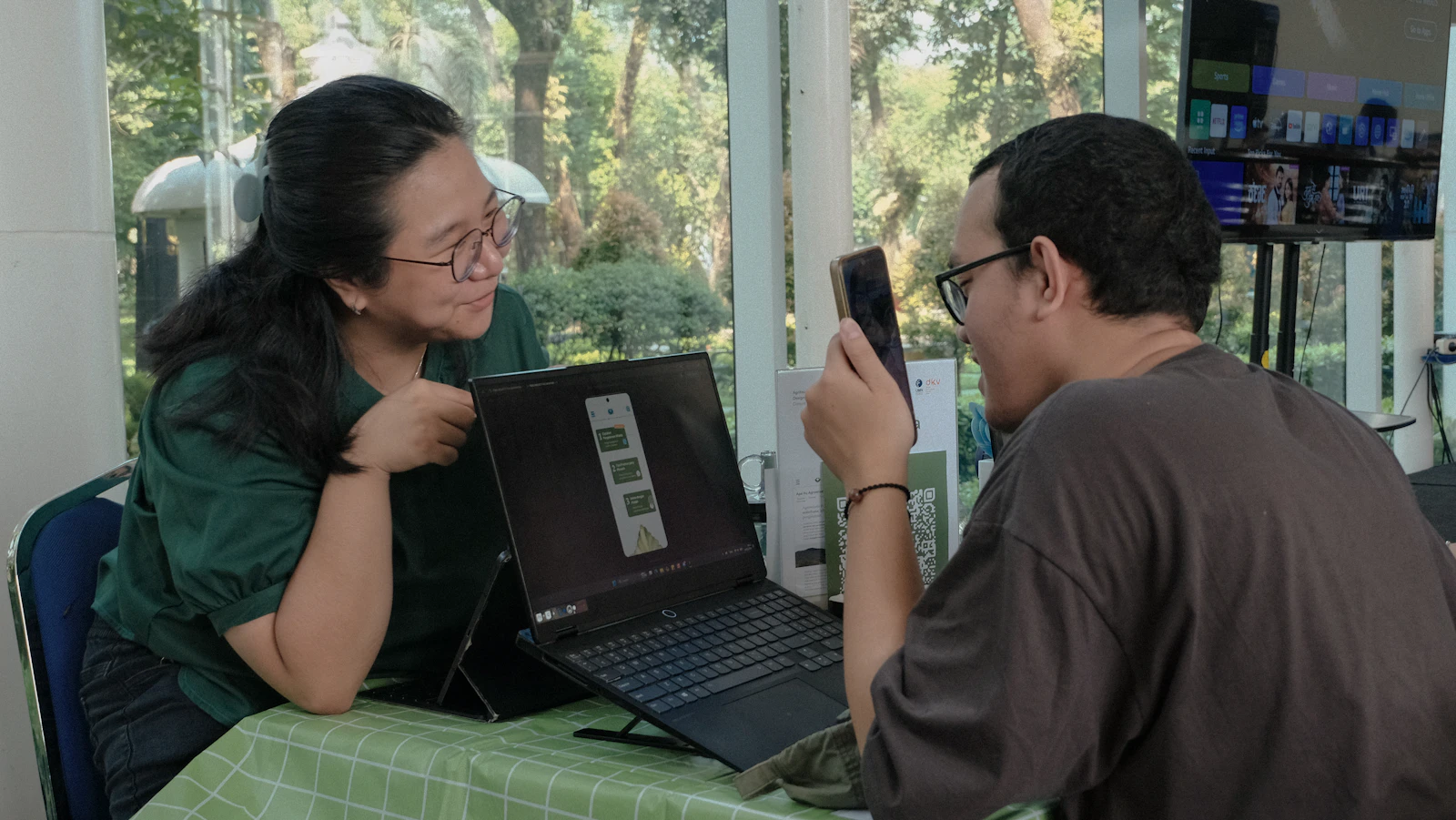
Two people testing and discussing a mobile application

Project 2

A consumer app gets thousands of reviews, but the team cannot easily tell what users are complaining about.

What work looks like

Analyze app-store reviews, group them into themes, identify the most common pain points, build a dashboard that summarizes feedback, and validate findings with the company team.

What you learn

Clustering, sentiment analysis, qualitative research, prioritization, and data storytelling.

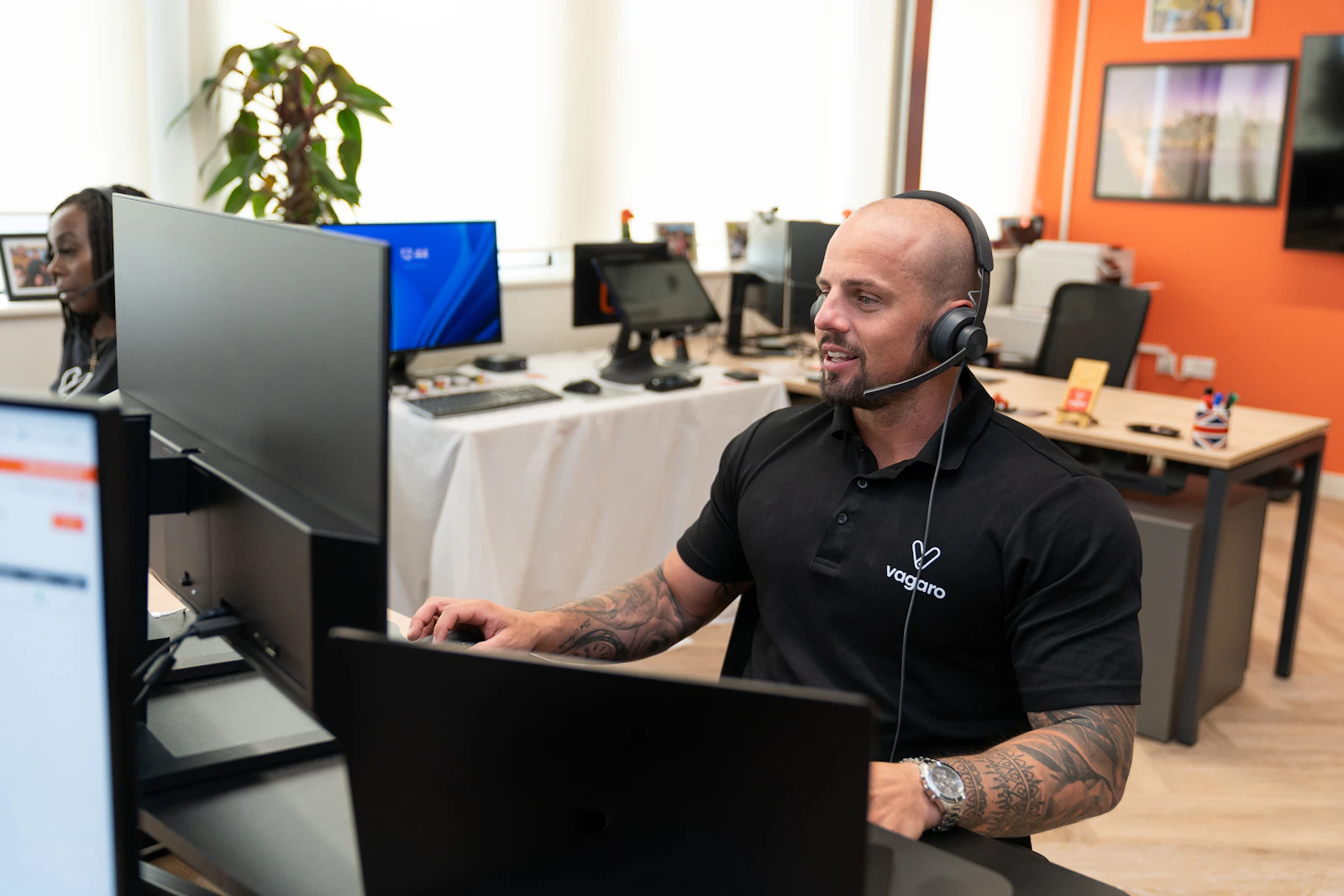
A customer-support specialist working at a computer

Project 3

A startup spends too much time answering the same customer questions over email.

What work looks like

Review common support questions, organize the company’s existing information, build an AI support assistant grounded in those materials, test whether answers are accurate, and identify when the AI should hand off to a human.

What you learn

RAG, semantic search, hallucination testing, workflow design, and human-in-the-loop AI.

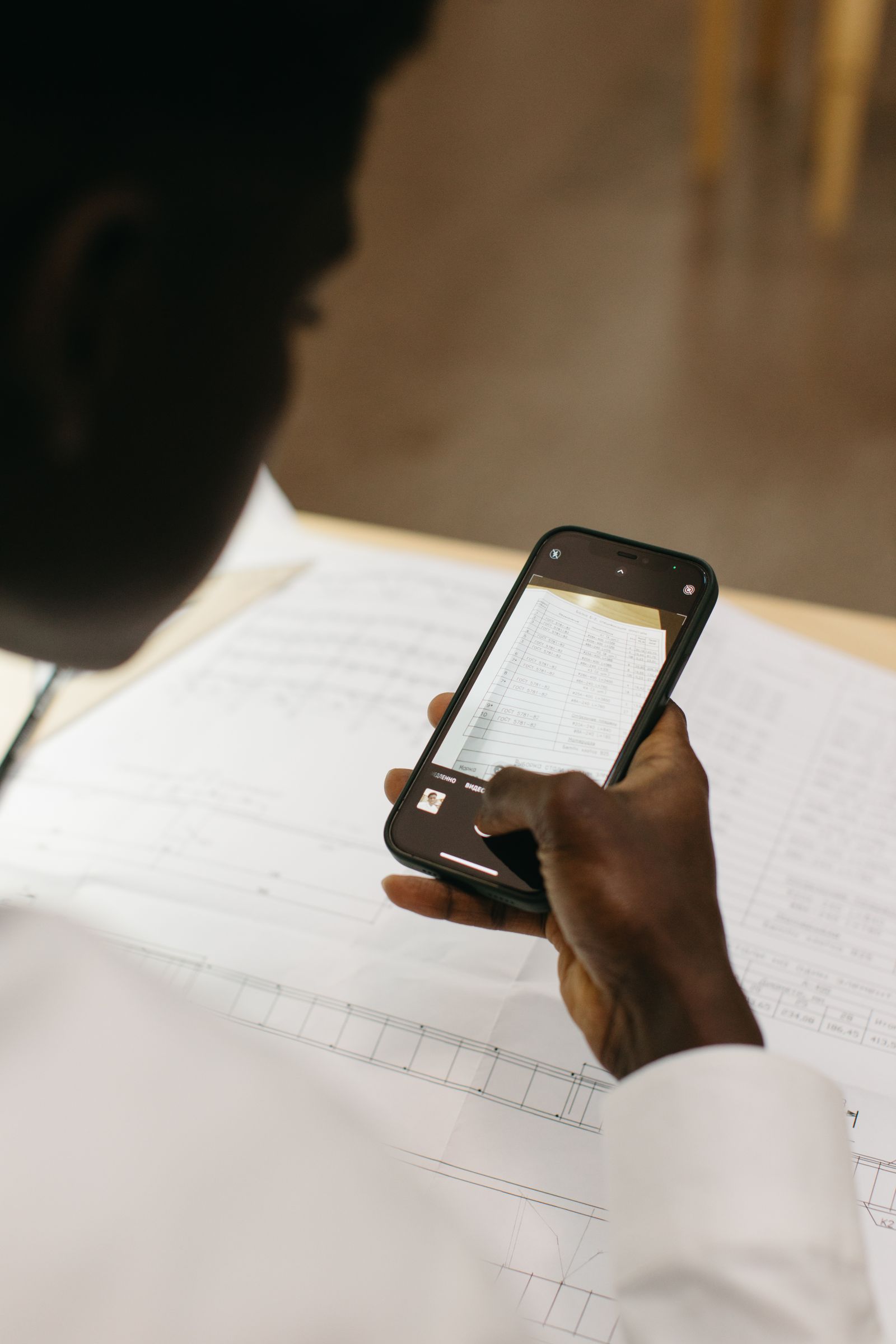
A person using a smartphone camera to scan a paper document

Project 4

A nonprofit that helps families access public benefits receives photos of letters, forms, and notices, but staff spend significant time manually reading them and figuring out what action is required.

What work looks like

Interview staff to understand the most common documents and pain points. Build a tool that uses OCR to extract text from uploaded photos, then uses AI to identify key information such as deadlines, required actions, names, and benefit types. Test it on a dataset of sample documents, measure extraction accuracy, identify failure cases like blurry images or unusual layouts, and improve the experience.

What you learn

OCR, structured data extraction, AI evaluation, customer interviews, edge-case testing, and product iteration.

What you leave our program with

  • Exclusive company access

    This is not a classroom assignment. Learn how companies really work through company touchpoints including kickoff, midpoint feedback, and the final presentation.

  • A high-quality, meaningful project

    Work on one substantial problem from research through prototype. There is no administrative busywork.

  • Silicon Valley mentorship

    Get weekly guidance from experienced engineers, product leaders, designers, founders, and operators who work and build in AI.

  • A portfolio story and resume boost

    Leave able to explain the problem, your contribution, your decisions, and what you built. We will guide you on how to add this project to your resume.

  • Recommendation letter

    Exceptional students may request a mentor recommendation. Everyone who successfully completes the program receives a Certificate of Completion and written documentation of their project experience.

In some cases, partner organizations may invite exceptional students to explore additional opportunities after the program.

Who this program is for

This program is for you if

  • You are genuinely curious about AI and want to learn how to use it to solve real-world problems.

  • You want to meet people who work in AI and build with AI every day.

  • You are willing to think, experiment, build, get feedback, and put real effort into your project.

This program may not be for you if

You are mainly looking for a resume line to fill

Yes, this helps your resume, but we also expect real contribution to the project and approximately 6–7 hours of work per week during the program.

You are primarily looking for academic research experience

Our projects are more business-oriented, with a focus on solving practical problems for companies.

You are not particularly interested in AI

AI is central to the program. You will spend significant time learning how to identify where AI is useful, build with modern AI tools, and evaluate whether your solutions actually work.

You are looking for a coding bootcamp

AI is not coding, though it is good at coding. We will not spend significant time on code reviews or learning a coding language.

From application to fellowship team

  1. 01

    Apply

    Tell us what interests you and what you hope to learn.

  2. 02

    Interview

    Discuss your curiosity, experience, and goals.

  3. 03

    Review challenges

    See available partner projects and share your preferences.

  4. 04

    Join your team

    We match 3-5 students by fit, age, experience, and time zone.

Apply now

Frequently asked questions

Do I need previous AI or coding experience?

No. Projects are matched based on your past experience, and we teach the tools needed to complete the project. Curiosity, initiative, and a willingness to learn matter more than already knowing everything.

What is the weekly time commitment?

Expect approximately 6–7 hours per week, including mentor meetings, team collaboration, AI learning, and independent project work. Most project work can be completed flexibly around school schedules.

Is the program remote or in person?

The Fellowship is fully remote. Mentor sessions, team meetings, and company checkpoints take place online.

How is this different from an AI course?

Most AI programs begin with a curriculum and give every student similar assignments. We begin with a real problem. Your team is matched with a company or nonprofit facing a genuine challenge, and you learn the AI tools and skills necessary to solve it. The goal is not simply to learn about AI. The goal is to use AI to produce something useful for someone real.

How is this different from finding an internship myself?

In this program, we treat every fellow as an intern. High school interns are often expected to work independently or complete whatever tasks happen to be available, including meaningless administrative work. The Fellowship is deliberately structured around learning. You still get the experience of working with a real organization, but we teach the relevant skills, provide weekly mentorship, and support your team throughout the process. You are given meaningful responsibility without being left on your own.

Are scholarships available?

Yes. Scholarships are available.

Interested?

Applications are reviewed in two rounds. The recommended deadline is October 1, 2026, and the final deadline is November 1, 2026. Scholarships are available.

Apply to the AI Startup Fellowship